Three Separate Payments, Not One
Almost every problem with baggage claims comes from treating this as a single claim. It is three, they have different rules, and you can be entitled to all of them at once.
| What you get | How it works | When |
|---|---|---|
| Your checked bag fee back | Automatic — no request needed, once you have filed a report | Delay past a defined threshold |
| Expenses while you wait | Receipted, reasonable, actual | From the start of the delay |
| Value of a lost bag and contents | Documented, capped, depreciated | Once the bag is declared lost |
Most travellers claim only the second and never see the first or the third.
The Rule That Changed in 2024
Under 14 CFR Part 260, effective 28 October 2024, US airlines must automatically refund your checked bag fee when a bag is significantly delayed. You do not have to ask.
The thresholds:
- 12 hours after arrival at the gate on a domestic itinerary
- 15 hours on an international itinerary whose longest segment is 12 hours or less
- 30 hours where that segment is longer than 12 hours
One condition triggers all of it: you must file a Mishandled Baggage Report with the airline that operated your final segment. No report, no automatic refund — which makes that piece of paper the single most valuable thing you can obtain at the airport.
Refunds must be processed within seven business days for card payments and twenty calendar days for cash or debit.
Note what this rule does not do. It returns the fee you paid to check the bag. It does not pay for what you had to buy while waiting, and it does not compensate you for a lost bag. Those are separate, and they are not automatic.
The Limits, Corrected
Two different regimes apply depending on the flight, and the figures moved recently.
US domestic flights fall under the airline's tariff, subject to a Department of Transportation ceiling. The maximum liability allowed under 14 CFR Part 254 is $4,700 per passenger.
International flights between treaty states fall under the Montreal Convention. Limits are set in Special Drawing Rights, an IMF unit whose dollar value moves daily, and they were raised on 28 December 2024 by roughly 18%:
| Montreal Convention limit | From 28 Dec 2024 | Previously |
|---|---|---|
| Baggage (Article 22.2) | 1,519 SDR — roughly $2,060–$2,175 | 1,288 SDR |
| Delay to passengers (Article 22.1) | 6,303 SDR | 5,346 SDR |
Three things follow. Any guide quoting 1,288 SDR is out of date. The baggage figure is a single per-passenger cap covering destroyed, lost, damaged and delayed bags together — not a separate allowance for each. And the delay limit is a different and much larger cap covering losses caused by delay generally, which is separate from the baggage cap and rarely mentioned.
An airline that offers you a fixed daily allowance is stating its own policy, not the law. Where the Convention applies, it governs, and it pays your proven actual loss up to the cap rather than a flat figure someone chose.
Get the Report Before You Leave the Airport
This is the step that determines everything else.
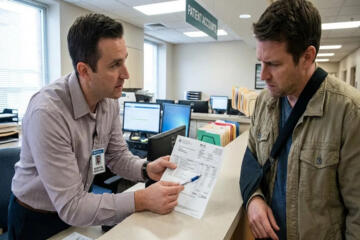
Go to the baggage service desk before clearing customs and file a Mishandled Baggage Report — sometimes still called a Property Irregularity Report. You get a reference number that links your bag tag to your ticket and enters the bag into the industry tracing system.
That number does two jobs: it triggers the automatic fee refund, and it is the anchor for every subsequent claim. A verbal assurance from a gate agent is not a report.
If the desk is unstaffed, file through the airline's app or website immediately and photograph the empty counter with a timestamp. Then keep your baggage tag receipt — the sticker from check-in — because it is your proof the airline took custody.
File with the operating carrier of your last segment, not whoever sold you the ticket. On a codeshare or multi-leg journey this is the most common misdirection, and chasing the wrong airline burns days you do not have.
Deadlines
The Montreal Convention sets strict written-claim windows, and missing them ends the claim regardless of merit:
- Damaged baggage — 7 days from receipt of the bag
- Delayed baggage — 21 days from the date the bag was placed at your disposal
Domestic carriers set their own windows in the contract of carriage, and some are shorter. Check yours rather than assuming the treaty periods apply.
Beyond that, an action must generally be brought within two years.
When Is a Bag Actually ""Lost""?
This differs by regime, and the distinction matters because the claim changes shape.
Internationally, a bag not delivered within 21 days of the date it should have arrived is legally considered lost under Article 17(3). Before that it is delayed, and you claim expenses. After it, you claim the value of the bag and contents.
Domestically, there is no 21-day rule. Airlines typically declare a bag lost after searching for somewhere between five and fourteen days under their own tariff — which can be sooner than international travellers expect.
Filing a total-loss claim on day five of an international delay is a common error that stalls the file. Claim expenses first; convert to a loss claim when the clock says you can.
What ""Reasonable Expenses"" Means
Airlines reimburse actual, verifiable, reasonable spending. There is no fixed daily allowance under the law, and the test is necessity relative to your situation.
Replacing business clothing before a meeting is defensible. Replacing a holiday wardrobe at leisure prices is not. The practical standard: could you explain this purchase to someone neutral as a necessary substitute for what was in the bag?
Buy in stages rather than all at once, since most bags arrive within a few days and staged spending reads as proportionate. Keep every receipt, photograph each one as you go, and note what item it replaced. Reconstructing this afterwards is not possible, and unitemised card statements are not receipts.
What Airlines Do Not Cover
Contracts of carriage exclude a defined list from checked baggage liability — commonly jewellery, cash, electronics, documents, medication, keys and fragile items. If a laptop disappears from a checked bag, the airline's answer is frequently that it was never covered.
Two responses. Carry those categories in the cabin, which is the actual solution. Or, where you must check something valuable, declare excess valuation at the counter and pay the fee, which raises the liability ceiling — carriers typically charge a small amount per hundred dollars of declared value up to a stated maximum.
Photograph the packed contents and the closed bag before you check it. A photograph of an open suitcase with the items visible is far more persuasive to an adjuster than a list typed from memory, and the file carries its own timestamp.
Stacking the Second Layer
Airline liability is capped. Your other coverage sits on top of it, not instead of it.
Credit card baggage benefits commonly pay around $100 a day for a few days after a delay of six hours, with lost luggage cover running to several thousand dollars per traveller. Travel insurance policies often define covered items more broadly than airline tariffs do — which matters precisely for the electronics the airline excluded.
The sequence is fixed and matters: claim with the airline first, obtain the settlement or the denial in writing, then submit that document to your card's benefits administrator or your insurer for the shortfall. Both are secondary and will ask for the airline's response. Note also that card benefits carry their own filing deadlines, commonly 60 to 90 days — see whether your credit card travel coverage is enough.
If the Airline Stalls
Move everything to writing. Email or the airline's claim portal, referencing the report number, with a clear statement of what you are claiming and under which regime.
Do not accept vouchers as final settlement if you are entitled to money. Where the Montreal Convention applies you are entitled to compensation, and saying so plainly — that you are claiming under the Convention and seeking payment rather than travel credit — often moves the file to someone with more authority.
Escalate to the regulator. A complaint to the US Department of Transportation is free and obliges the airline to respond. This is consistently the most effective step available to an individual traveller and costs nothing.
Claims companies will pursue it for a share of the recovery, typically a quarter to a third. Worth considering only once you have exhausted the free routes, because the free routes usually work.
Two Situations
The delay that produced three payments
A traveller lands internationally without their bag, files the mishandled baggage report at the desk before clearing customs, and keeps the reference number.
The bag arrives four days later. Three things follow: the checked bag fee is refunded automatically because the delay passed the threshold and a report existed; receipted purchases of essentials during the wait are reimbursed by the airline; and the balance above the airline's settlement is recovered from the card benefit that paid for the flight.
None of this required argument. It required a report number obtained in the first twenty minutes.
The claim that failed on paperwork
A traveller is told at the carousel that the bag will follow on the next flight and to expect a call. No report is filed. The bag does not arrive.
Days later, the airline has no formal record of the event, the automatic fee refund never triggers because it depends on a report, and the expense claim starts from a position of proving the bag was mishandled at all.
Nothing was denied unfairly. The event existed in a conversation rather than in a system.
Both are composite illustrations of common patterns, not accounts of specific individuals.
Checklist
- Before you fly: photograph the packed contents and the closed bag; keep valuables in the cabin.
- At check-in: keep the bag tag receipt; declare excess valuation if you must check something valuable.
- On arrival: file the mishandled baggage report before clearing customs, with the operating carrier of the last segment.
- Record the reference number, the agent's name and the time.
- Buy essentials in stages and photograph every receipt.
- Track the bag using the reference number rather than waiting for calls.
- Watch the deadlines: 7 days for damage, 21 days for delay on international flights, and your carrier's own window domestically.
- Claim in order: airline first, then card or insurer with the airline's written response.
- Escalate to the DOT if the airline stops responding.
Frequently Asked Questions
Do I get my bag fee back?
Yes, automatically, if the delay exceeds 12 hours domestically, 15 hours on shorter international itineraries or 30 hours on long-haul — provided you filed a mishandled baggage report. Refunds are due within seven business days on card payments.
How much can I spend while waiting?
There is no legal daily figure. Reimbursement is for actual, verifiable, reasonable purchases judged against your circumstances. Buy in stages and keep receipts.
Can the airline blame the weather?
Weather explains a disruption; it does not remove liability for baggage. Under the Montreal Convention the carrier's liability for baggage is strict, subject to limited defences.
What is my bag actually worth in a claim?
Up to $4,700 per passenger domestically, or 1,519 SDR internationally — roughly $2,060 to $2,175 depending on the exchange rate. Airlines apply depreciation and require documentation, so the settled figure is usually below the cap.
Which airline do I claim from on a codeshare?
The carrier that operated your final segment, regardless of who sold the ticket.
Are my electronics covered?
Usually not in checked baggage — most contracts of carriage exclude them. Travel insurance and card benefits often define covered items more broadly, which is exactly where the second layer earns its place.
How long until I am paid?
Expense claims commonly settle in weeks; lost bag claims take considerably longer. If nothing has moved after a couple of months with no explanation, escalate to the regulator.
Does travel insurance replace the airline claim?
No. It sits above it. You claim from the airline first and present the outcome to your insurer for the shortfall — see what travel insurance actually covers.
The Short Version
Two rule changes in 2024 improved your position, and most published guidance has not caught up. Checked bag fees are now refunded automatically past defined delay thresholds, and the Montreal Convention limits rose about 18% on 28 December 2024 to 1,519 SDR for baggage.
Everything depends on one action: file the mishandled baggage report before you leave the airport, with the airline that operated your last leg. That report triggers the automatic refund and anchors every other claim.
Then treat it as three claims rather than one — the fee back, the receipted essentials, and the value of a lost bag — and claim from the airline before your card or insurer, because both of those will ask what the airline said first.
Sources and Editorial Note
Domestic baggage liability limits, the automatic bag fee refund rule and complaint procedures are set out by the US Department of Transportation, under 14 CFR Parts 254 and 260; the refund rule took effect on 28 October 2024. Montreal Convention liability limits were adjusted by ICAO effective 28 December 2024 to 1,519 SDR for baggage and 6,303 SDR for delay, superseding the 2019 figures; SDR values float daily against the dollar, so conversions here are approximate.
Contract of carriage terms, domestic claim deadlines, excluded item lists and excess valuation charges vary by airline. Card and insurance benefit levels vary by product. This article is general information, not legal advice — check your carrier's contract of carriage and your own policy documents, and contact your state insurance department for complaints about an insurance policy.