The Policy You Have Is Probably the Wrong One
Two distinct mistakes cost landlords money, and most people make one of them.
The first is keeping a homeowners policy on a property you no longer live in. This happens constantly when a former residence becomes a rental. An HO-3 is written on the assumption that the owner occupies the building. If a claim arises and the carrier discovers the property is tenant-occupied, it can deny on the basis that the risk was misrepresented — and that discovery usually happens at exactly the moment you need the coverage.
The second is buying a landlord policy without checking which form it is. Dwelling policies come in tiers, and the cheap ones are cheap for a reason:
| Form | Perils covered | Settlement |
|---|---|---|
| DP-1 | A short named-peril list | Often actual cash value |
| DP-2 | A broader named-peril list | Usually replacement cost |
| DP-3 | Open perils on the structure — covered unless excluded | Replacement cost |
The difference between named perils and open perils is the difference between ""we cover this list"" and ""we cover everything except this list."" A DP-1 at actual cash value on a property with a fifteen-year-old roof will not rebuild anything.
Ask your agent which form you hold. It is on the declarations page, and it is the single most consequential fact about your coverage.
The Clause Nobody Tells Landlords About
Here is the gap that is specific to rental property and almost never discussed: vacancy.
Dwelling policies contain a vacancy provision. If the property stands unoccupied beyond a defined period — commonly 30 or 60 days — coverage for vandalism, glass breakage, theft and certain water losses can be suspended, and in some cases the policy can be cancelled entirely.
Consider how often a rental is actually empty. Between tenants. During a renovation between lettings. While an eviction runs its course. While a probate property waits to be sold. These are routine landlord situations, and a vacant building is a higher risk precisely because nobody is there to notice a burst pipe or an open door.
The fix is a vacant property endorsement or a separate vacancy policy, arranged before the building empties rather than after. Tell your insurer when a unit will be vacant for an extended period. It is a short conversation and it closes a hole large enough to lose a building through.
What the Numbers Say About Where Risk Sits
Industry claim data, based on ISO figures compiled by the Insurance Information Institute, shows a clear pattern:
| Cause | How often | Average claim |
|---|---|---|
| Wind and hail | About 1 in 36 insured homes a year | Most frequent |
| Water damage and freezing | About 1 in 67 | Roughly $15,400 |
| Fire and lightning | About 1 in 430 | $83,991 — the highest severity |
| Liability | About 1 in 1,150 policies | Roughly $29,880 on average |
Two conclusions for a landlord. Fire is unlikely and financially catastrophic, which is what the dwelling limit is for. And liability claims are rare on average — but averages describe the middle of a distribution, not the tail, and the tail is where a landlord loses a portfolio. The average liability claim will not bankrupt you. The one that does will not be average.
Liability: Set the Limit for the Tail
Landlord policies commonly default to $300,000 of liability. Set against a serious injury claim — a fall on a defective stair, a dog bite by a tenant's animal, a fire caused by wiring you were told about — that limit is a starting point rather than protection.
Two moves, in order.
Raise the underlying limit to $500,000 or the maximum offered. The incremental premium is usually small relative to the exposure.
Add an umbrella policy sitting above both your landlord and personal auto policies. For a landlord this is not a luxury item; it is the mechanism that stops a single judgment reaching your other properties and personal assets. Confirm specifically that the umbrella schedules your rental properties — some personal umbrellas exclude or limit rental exposure, which is exactly the thing you are buying it for.
Our guides to liability coverage and how much liability protection is enough cover the limit-setting logic.
Loss of Rent Is a Separate Limit
Fair rental value coverage pays the rent you lose while the property is uninhabitable after a covered loss. It is usually expressed as a percentage of the dwelling limit or as a number of months.
Two things to check. Is it enough time? Major rebuilds routinely take longer than six months once permitting, contractor availability and materials are accounted for — twelve to eighteen months is a more realistic planning figure. And is the amount right? Provide your agent with documented current market rent, since the limit should track what the property actually earns, not what it earned when the policy was written.
Note the trigger: it pays after a covered loss. It does not pay for a vacancy because you cannot find a tenant, and it does not pay because a tenant stopped paying. Those are business risks, not insured perils.
Replacement Cost, Not Actual Cash Value
Choosing actual cash value to save on premium is the false economy of landlord insurance. ACV subtracts depreciation, so a fifteen-year-old roof destroyed in a hailstorm pays a fraction of what a new one costs — and you fund the rest.
Take replacement cost on the dwelling, and consider extended replacement cost, which pays a defined percentage above the limit when rebuild costs exceed it. Construction costs have risen sharply, and a dwelling limit set several years ago is likely short. Review it annually against current rebuild costs rather than market value — see how insurers calculate replacement cost and the difference between the two.
Also check how the roof settles specifically. Many policies now depreciate roof surfacing on an age schedule regardless of the settlement basis elsewhere in the policy — a detail covered in handling a roof damage claim.
Endorsements Worth the Money
Ordinance or law. A substantial rebuild on an older rental triggers current code — wiring, egress, sprinklers in some jurisdictions. The base policy pays to replace what existed, not to bring it up to code. On pre-1980 buildings this is close to essential.
Equipment breakdown. Covers mechanical and electrical failure of systems the property policy otherwise excludes as wear: boilers, HVAC, electrical panels, sometimes appliances. Inexpensive, and it addresses a category of loss landlords face regularly.
Water back-up and sump discharge. Sewer backups are excluded from the base policy and are common in older buildings with clay lateral lines. Take a limit that reflects the actual cost of remediating a finished basement, not the default.
Personal injury liability. Standard liability covers bodily injury and property damage. It does not cover allegations of wrongful eviction, invasion of privacy, or defamation — all of which are landlord-specific exposures arising from the ordinary business of managing tenancies. This endorsement covers the legal defence, which is most of the cost even when you are right.
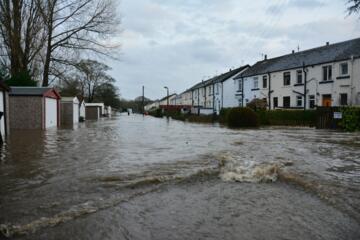
Flood, if relevant. Never included. Separate policy, 30-day waiting period. See whether you need it.
Require Renters Insurance, Correctly
Write it into the lease: proof of a renters policy with a stated minimum liability limit, renewed annually, with evidence provided.
The reason is not that you benefit from their contents coverage. It is that their liability coverage responds first when the tenant causes damage — a kitchen fire, an overflowing bath — which keeps the loss off your claims record. Your claims history drives your renewal price and, in the current market, whether renewal is offered at all.
On the paperwork, the two terms get confused:
- Additional interest on the tenant's policy means you are notified if it lapses or is cancelled. This is what you want as standard, and it is what makes the lease requirement enforceable rather than decorative.
- Additional insured extends some of the tenant's liability coverage to you for claims arising from their tenancy. Stronger, not always available, and worth asking about.
Point tenants at our renters insurance guide — resistance usually evaporates once they see the price.
Two Gaps That Catch Experienced Landlords
Short-term letting. Listing a property or a unit for nightly stays is commercial use. A standard landlord policy may exclude claims arising during those periods — even a couple of weeks a year. Platform-provided protection is not your policy and typically sits above rather than instead of it. You need a home-sharing endorsement or a specialist commercial policy.
Contractors without their own cover. If an uninsured handyman falls from a ladder on your property, you are the deep pocket. Ask for a certificate of insurance showing general liability and workers compensation before anyone starts work, and keep it on file. This is the cheapest risk control available to a landlord.
Deductibles and Cash Flow
Raising the deductible from $1,000 to $2,500 meaningfully reduces premium, and for a landlord with reserves that is usually the right trade — you are self-insuring the small stuff and buying protection against the catastrophic.
Two conditions. The savings should actually go into a maintenance reserve rather than into cash flow; otherwise you have not shifted risk, you have simply deferred it. And check whether your wind and hail deductible is a separate percentage of the dwelling limit rather than a flat sum — on a multi-property portfolio in a storm-exposed market, that is a materially different number. See how deductibles work on a home claim.
Two Situations
The system failure nobody budgeted for
A small multi-unit building suffers a total electrical failure following a power surge. The property policy treats mechanical and electrical failure as wear rather than a covered peril, so the base policy does not respond.
An equipment breakdown endorsement, added at trivial cost, covers the repair and the temporary accommodation for displaced tenants.
The lesson is that the endorsements addressing the most frequent landlord losses are usually the cheapest ones on the schedule.
The judgment above the limit
A visitor is seriously injured on a defective walkway and sues. The underlying landlord liability limit is exhausted well before the claim is resolved.
An umbrella policy scheduling the rental property covers the excess and the defence costs. Without it, the shortfall would have been satisfied from the owner's other assets.
What made the difference was not the umbrella existing but the rental property being scheduled on it. A personal umbrella that excludes rental exposure would have produced the opposite outcome.
Both are composite illustrations of common patterns, not accounts of specific individuals.
Annual Review
- Confirm the form — DP-1, DP-2 or DP-3 — and the settlement basis.
- Update the dwelling limit against current rebuild costs, not market value.
- Update fair rental value against current market rent, and check the duration.
- Check the liability limit and confirm the umbrella schedules every property.
- Confirm vacancy terms and notify the insurer of any extended vacancy in advance.
- Verify tenant policies are in force and you are listed.
- Collect certificates of insurance from every contractor.
- Re-read the exclusions, not the premium. That is where the policy actually differs.
Frequently Asked Questions
Does landlord insurance cover tenant damage?
Sudden accidental damage, generally yes. Wear and tear, no. Intentional damage by a tenant is excluded under many policies, though tenant vandalism endorsements exist. Routine damage is a security deposit matter, and filing small claims against your own policy costs more in renewal terms than it recovers.
Is flood included?
Never. Separate policy, with a waiting period before it takes effect.
Do I need a policy per property?
Individual policies work at small scale. Beyond roughly five units, a commercial package or a scheduled portfolio policy usually reduces administration and gives more consistent limits.
What if the property is empty between tenants?
Check the vacancy provision. Beyond 30 or 60 days, significant coverage can be suspended. Notify your insurer and add a vacancy endorsement before the period begins.
Can I lower premiums without cutting coverage?
Raise the deductible if you hold reserves, and ask about protective device credits — though be realistic about their size, which our guide to security system discounts covers. Monitored water leak detection is the one worth having on a property you do not live in.
Does it cover lost rent if a tenant stops paying?
No. Fair rental value responds only after a covered physical loss makes the property uninhabitable. Non-payment is a business risk.
Am I liable for injuries to my tenant?
Potentially, where the injury results from a condition you were responsible for maintaining. Documented inspections and prompt responses to maintenance requests are the practical defence — keep the paper trail, and an inventory and condition record alongside it.
The Short Version
Three things decide whether a landlord policy actually works. Which dwelling form you hold, because DP-1 at actual cash value will not rebuild anything. Whether your liability limit is set for the tail rather than the average, with an umbrella that schedules the property. And whether you have dealt with vacancy before the building empties, because that is the landlord-specific hole nobody mentions.
Then the cheap endorsements that address the losses you will actually have: equipment breakdown, water back-up, ordinance or law on an older building, and personal injury liability for the disputes that come with managing tenancies.
Read the exclusions rather than the premium. Landlord policies differ far more in what they leave out than in what they cost.
Sources and Editorial Note
Claim frequency and severity figures are Insurance Information Institute calculations based on ISO, a Verisk Analytics business, covering homeowners claims for 2019–2023, published by the Insurance Information Institute. These describe owner-occupied homeowners policies; dwelling-policy experience differs, and the figures are used here as an indication of relative frequency and severity rather than as landlord-specific data.
Dwelling policy forms, vacancy provisions, endorsement availability and umbrella exclusions vary substantially by carrier and by state. This article is general information, not legal advice or advice on your specific policy — confirm every point against your declarations page and endorsements, and contact your state insurance department for complaints or questions about licensing.