Most of Your Premium Was Decided Before You Moved In
Guides on this subject list a dozen rating factors and imply they carry roughly equal weight. They do not, and the imbalance is the most useful thing to understand.
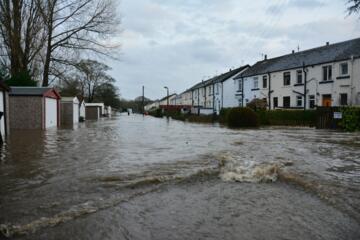
The largest single driver is where the house is. Insurers price at a granular geographic level, often smaller than a ZIP code, using catastrophe models that estimate expected losses from wind, hail, wildfire and severe convective storms in that specific area. Two identical houses a few miles apart can be priced very differently because the models see different exposure.
Second comes what it would cost to rebuild, which is a construction cost question rather than a property market one. Third comes the building itself: age, construction type, and above all the roof. After that, everything else — discounts, deductible choices, bundling — operates at the margins.
This matters practically. A homeowner who spends an afternoon collecting small discounts is working on the last ten percent of the number. The factors that actually move it are the roof, the dwelling limit, the deductible and, in states where it is permitted, the insurance score. Everything else is worth doing and worth not overestimating.
The Roof Is Its Own Rating Factor Now
Roof condition has moved from a checkbox to a central variable, and the reason is aerial imagery.
Insurers increasingly assess roofs from high-resolution overhead photography, without an inspector visiting. That assessment can produce a higher rate, a change in how the roof settles at claim time, a requirement to replace it, or a non-renewal — sometimes on a policy that has run without incident for years.
Three things follow.
- Know your roof's age and material, and be able to document them. A roof the insurer believes is twenty years old and is in fact eight is a correctable pricing error.
- Ask how your roof settles, because a replacement cost roof and one on an age-based payment schedule are different products at similar prices — the mechanics are in handling a roof claim.
- Impact-resistant materials attract meaningful discounts in hail-exposed states and, in some, those discounts are mandated. Ask before replacing rather than after.
The Claims File You Have Never Seen
Insurers check a shared claims database when quoting. It records property loss claims for roughly the last five to seven years, and two features of it surprise people.
First, it follows the property as well as the person. Claims made by a previous owner can appear on a report for a house you have just bought, and they can affect what you are quoted.
Second, an enquiry can register even without a claim. Calling to ask whether something would be covered is sometimes logged as a claim enquiry, which is why ""is this worth claiming"" is a question better asked of a contractor than of your insurer.
You have a right to see the file and to dispute errors in it, at no cost, under federal consumer reporting law. Requesting it before you shop is worth the fifteen minutes, because a claim recorded against the wrong address or a withdrawn claim shown as paid is not rare and is correctable.
Credit-Based Insurance Scores, and Where They Are Banned
In most states, insurers may use a credit-based insurance score as a rating factor. It is not your credit score, though it is built from the same data, and in states where it is permitted it can be one of the more influential variables.
A small number of states prohibit or sharply restrict the practice, and the rules are not the same for home and auto — a state may bar it for motor policies while allowing it for homeowners, or restrict it for homeowners specifically. Regulatory attempts to ban it have also been challenged in court, so the position changes. Check your own state rather than relying on a list you found online, including this one.
Where it applies, the levers are the ordinary ones: paying on time, keeping utilization low, and correcting errors on the underlying credit file. Federal law also requires an insurer to tell you if adverse information affected your rate, which is a notice worth reading rather than discarding.
What You Actually Control
| Lever | Effect | The catch |
|---|---|---|
| Raising the deductible | Substantial | Only worth it if you can produce that sum within days. Repairs stall without it, and delayed drying leads to mold exclusions |
| Correcting the dwelling limit | Substantial | Insuring to market value rather than rebuild cost is a common error in both directions — see replacement cost versus market value |
| Roof age and material | Substantial | Only at replacement time, and the discount often appears at the next renewal rather than immediately |
| Bundling home and auto | Moderate | The largest advertised discount does not always produce the lowest total. Compare the combined figure against two separate best quotes |
| Water leak detection and shutoff | Moderate | Discounts vary widely, but the real return is avoiding the claim, since water is among the most frequent causes of loss |
| Fewer small claims | Moderate and lasting | See below |
| Security systems | Small | Worth having for other reasons. Buying one for the insurance discount rarely pays back — see the arithmetic on security discounts |
The Arithmetic of a Small Claim
This is where homeowners lose the most money without noticing.
Before filing, work out three numbers: the repair cost, your deductible, and the difference between them. Then consider that the claim will sit in the shared database for years, that it can affect renewal pricing and eligibility, and that a second claim within a short period matters far more than the first.
Where the gap between the repair cost and the deductible is small, absorbing it is usually the better outcome. Where it is large, claim — that is what the policy is for, and declining to claim genuine damage to protect a rate is a false economy that also risks a non-renewal for an unrepaired defect. The consequences of filing are set out in why premiums rise after a claim.
One exception worth knowing: catastrophe losses affect regional base rates whether or not you personally claimed. Absorbing hurricane damage does not protect you from the price of a hurricane season.
Two Traps in Setting the Dwelling Limit
Underinsuring triggers a penalty. Many policies require you to insure to a stated percentage of full replacement cost — commonly eighty percent. Fall below it and even a partial claim can be reduced proportionally, so the saving on premium is repaid at the worst possible moment.
Overinsuring is also possible. A limit set from the market value of a property in an expensive location can exceed what it would actually cost to rebuild, and you are paying for coverage you cannot collect. The estimate should come from construction cost, not from what the house would sell for — see how insurers calculate replacement cost.
Refresh the figure every few years, and after any renovation. Construction costs move faster than most people update their policies, and a limit set five years ago is probably wrong now.
Why Your Rate Rose Even Though Nothing Changed
Most increases have nothing to do with you. Insurers file rate changes with state regulators covering entire territories, driven by regional loss experience, reinsurance costs, and construction cost inflation. Your policy is also indexed each year so the dwelling limit keeps pace with rebuilding costs, which raises the premium even with no other change.
If yours has jumped, ask for the reason in writing before shopping. Sometimes it is a rating error, a discount that dropped off, or a roof reassessment you can rebut with documentation. That conversation is faster than switching, and the reasons behind a year-on-year rise are covered in why your premium rose this year.
What Happens When the Market Tightens
In several states the practical question has stopped being price and become availability. Insurers have withdrawn from parts of the wildfire and coastal wind markets, tightened underwriting on roof age and condition, and non-renewed policies that had run for years without a claim.
Three consequences worth planning for. Non-renewal is generally permitted at the end of a term and is not the same as cancellation, so it is not a mark against you, but it does leave you shopping on a deadline. State-backed insurers of last resort exist in most exposed states and typically offer narrower coverage at a higher price — adequate as a bridge rather than a destination. And a property that cannot be insured cannot easily be mortgaged, which makes coverage an issue at sale as well as at renewal.
If a non-renewal notice arrives, start immediately rather than at the deadline, and ask what specifically triggered it. Where it is roof condition or a missing mitigation feature, fixing it can restore eligibility with other insurers even if not with that one.
Questions People Ask
Does the market value of my home matter?
Almost not at all for pricing the structure. Rebuilding cost is what matters, and in some markets the two numbers are far apart in either direction.
Will a claim by the previous owner affect me?
It can. Request the property's claims history before or shortly after purchase, and dispute anything inaccurate.
Is a higher deductible always better?
Only if the money is genuinely available quickly. On a percentage wind or hail deductible, convert it to dollars first — the sum is often much larger than owners expect. See how a deductible works.
Do renovations raise my premium?
Usually, because they raise rebuilding cost. Not telling the insurer is the worse option, since an under-declared property can be underinsured at claim time. Some upgrades — wiring, plumbing, roof, impact-rated openings — reduce the rate at the same time.
How often should I shop?
Every couple of years, and whenever a renewal rises sharply. Compare matched coverage rather than headline price, and check what each policy excludes before deciding one is cheaper.
The Short Version
Location and rebuilding cost dominate the calculation, and neither is something you can negotiate. Chasing small discounts works on the last slice of the number.
The roof is now a rating factor in its own right, assessed from aerial imagery without anyone visiting, so know its age and material and be able to prove them.
Request the shared claims report for your property. It follows the address as well as the owner, it can include a previous owner's claims, and errors in it are common and correctable at no cost.
Set the dwelling limit from construction cost rather than market value, and check whether your policy requires you to insure to a stated percentage of it — falling short reduces even partial claims.
Sources and Editorial Note
Rating factors, catastrophe modelling and claims frequency patterns in homeowners insurance are described by the Insurance Information Institute. Rate filings are reviewed by each state insurance department, which also publishes the rules on credit-based insurance scores in that state. Your right to obtain and dispute the contents of consumer reports used in insurance underwriting, including property claims histories, arises under federal fair credit reporting law — guidance is published by the Consumer Financial Protection Bureau.
Percentage figures circulating for bundling discounts, deductible savings and premium differences between insurers depend entirely on state, property and individual rating factors and are not generalizable; none is reproduced here.
The use of credit-based insurance scores, mandated discounts for impact-resistant roofing, coinsurance requirements and non-renewal rules vary by state and have changed recently in several. This article is general information about insurance, not legal or financial advice — confirm every point against your declarations page and with your insurer.