Six Coverages Wearing One Name
A homeowners policy is not one product. It is six separate coverages sold together, each with its own limit, and most confusion about what is covered comes from not knowing which one is being asked about.
| Section | What it covers | Typical limit |
|---|---|---|
| A — Dwelling | The house and anything attached to it | Set to rebuilding cost. Everything else is usually a percentage of this |
| B — Other structures | Detached garage, fence, shed, driveway gate | Commonly around 10% of Coverage A |
| C — Personal property | Your belongings, wherever they are | Commonly 50–70% of Coverage A, with category sublimits |
| D — Loss of use | The increase in living costs while the home is uninhabitable | Commonly 20–30% of Coverage A, sometimes time-limited instead |
| E — Personal liability | Injury or damage you or your household cause to others | A stated figure, frequently far too low as sold |
| F — Medical payments to others | Small medical bills for a guest injured on your property, regardless of fault | A small stated figure |
Two structural points that follow. Because most limits are derived from Coverage A, an incorrect dwelling limit quietly misprices five other coverages at the same time. And E and F are two different things: liability requires fault and can involve legal defense; medical payments is a no-fault goodwill payment designed to settle small incidents without a dispute.
Your Belongings Are Covered Differently From Your House
On a standard policy, the structure is written on an open peril basis — covered unless excluded — while contents are written on a named peril basis, meaning only listed causes are covered. The burden of proof runs in opposite directions on the two halves of the same policy. Upgrading contents to open peril is an available endorsement and is rarely offered unprompted. The mechanism is explained in how coverage triggers work.
Then there are the sublimits, which apply regardless of your overall contents limit and regardless of how well you can document the loss:
- Jewelry, watches and furs are capped at a low figure for theft, commonly around $1,500 in total, not per item.
- Firearms and silverware carry their own theft caps, usually somewhat higher.
- Money, coins and precious metals are capped very low, typically a couple of hundred dollars.
- Securities and deeds have their own modest limit.
- Business property kept at home is capped, and business activity may be excluded entirely.
- Watercraft, trailers and equipment have separate small limits.
Note the pattern: several of these apply specifically to theft rather than to all causes, so a ring destroyed in a fire and a ring stolen are treated differently. Scheduling an item — listing it individually with an agreed value — removes the cap, usually broadens the covered causes and often removes the deductible for that item. The full picture is in what your policy might not cover.
One more feature people do not use: contents cover generally follows you off the premises. Belongings stolen from a hotel room or a car are usually claimable under the home policy, subject to the same sublimits.
Liability Travels Further Than the Property
Coverage E is the most under-appreciated section and the one most commonly bought at an inadequate limit.
It responds to bodily injury and property damage you are legally responsible for, and it is not confined to your address. A dog bite in a park, a bicycle collision on holiday, a child breaking something at someone else's house — these are ordinarily within scope. It also pays legal defense costs, generally in addition to the limit rather than out of it, which matters because defense can cost more than the claim.
What it does not cover: anything arising from a vehicle, which belongs to the auto policy; intentional acts; and business activities conducted from home. Certain dog breeds are excluded by some insurers, and home-based businesses need their own arrangement.
On the limit: liability is the one number where the extra cost of doubling coverage is usually small relative to the exposure, and an umbrella policy sitting above both home and auto is frequently cheaper than people assume. The framing is in what liability coverage pays for and liability coverage for homeowners.
Loss of Use Is Triggered by Habitability
Coverage D pays the increase in your cost of living while the home cannot be lived in — temporary accommodation, higher food costs, additional travel, pet boarding, storage.
Two things people get wrong. It is the increase, not the total, so you keep receipts and compare against your normal spending. And uninhabitable is a habitability test rather than a destruction test: loss of utilities, smoke contamination or a mandatory evacuation order can qualify while the building still looks intact. See what this coverage pays during an evacuation.
What Is Not Covered, and Why
The exclusions are not arbitrary. Almost all of them fall into three groups.
Predictable deterioration. Wear and tear, gradual leaks, rot, rust, pests, settling and general maintenance. Insurance covers sudden and accidental events, not the consequences of time. This is the origin of the most common denial: a pipe that bursts is covered, a pipe that has been seeping for months usually is not.
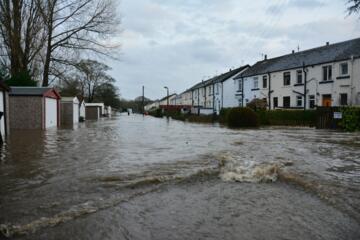
Catastrophic perils priced separately. Flood and earth movement are excluded from standard policies because their loss distribution does not work inside a general product. Both are available separately — see why floods are not covered and whether you need flood coverage. Sewer and drain backup falls between the two and needs its own endorsement.
Things that belong to another policy. Vehicles, business operations, and in most cases anything you rent out commercially.
Mold sits slightly apart: usually covered at a low sublimit when it results from a covered peril, and excluded where it results from a maintenance failure or from a delay in drying the property out.
Replacement Cost or Actual Cash Value
The single most consequential setting in the policy, and it can differ between the structure and the contents.
Replacement cost pays what it costs to replace with new. Actual cash value pays that figure minus depreciation, which on a ten-year-old roof or a five-year-old sofa is a large reduction.
Check both settings on your declarations page, and check separately how the roof settles — roof payment schedules that pay on an age basis inside an otherwise replacement cost policy have become common. The distinction is set out in replacement cost versus actual cash value.
Worth adding while you are there: ordinance or law coverage, which pays the difference between rebuilding what was there and meeting a building code adopted since. On any older house it is among the most valuable endorsements relative to its price.
What Claims Actually Look Like
The pattern published by industry researchers is consistent and differs from what people expect. Wind and hail account for the largest share of claims by frequency. Water damage and freezing follow closely and are the ones most often disputed, because the line between sudden failure and gradual deterioration is where the argument lives. Fire is comparatively rare and by far the most severe. Theft is a smaller share than most homeowners assume.
Two implications. Water is the peril worth spending money to prevent, since leak detection and shutoff devices address the most frequent cause of loss. And your deductible — particularly a percentage wind or hail deductible — applies to the category most likely to produce a claim, which is why converting it to dollars matters. See how a deductible works on a home claim.
Questions People Ask
Does it cover my home office?
Equipment is subject to the business property sublimit, and liability arising from the business is generally excluded. A rider or a separate policy is needed if clients visit or you hold stock.
What about a tree falling?
Damage to the structure is typically covered. Removing a tree that fell without damaging anything usually is not, or is capped at a small figure.
Is food lost in a power cut covered?
Many policies include a small allowance, sometimes without a deductible, and treat on-premises and off-premises power failure differently — see what home insurance covers for outages.
Am I covered if I rent the place out occasionally?
Frequently not. Short-term letting is a commercial activity and most standard policies exclude or limit it — see landlord insurance essentials.
Does it cover identity theft?
Only as an optional endorsement, and the coverage is mostly for recovery costs rather than for losses — see identity theft and cyber cover.
Three Things to Check Today
None of these take long and each one is a common and expensive error.
Convert every percentage deductible to dollars. A wind or hail deductible expressed as a percentage is calculated on the dwelling limit rather than on the size of the loss, and the resulting figure is usually much larger than owners expect.
Total up anything that would hit a sublimit. Rings, inherited silver, a firearm collection, cash kept at home, equipment for work. If the total in any category exceeds the cap, scheduling is the fix and it is usually inexpensive.
Check the liability limit against your actual exposure, not against the default that came with the policy. A dog, a pool, a trampoline or teenage drivers all raise it, and the cost of a higher limit is small.
The Short Version
It is six coverages, not one, and five of them are usually calculated as a percentage of the dwelling limit — which means getting that limit wrong misprices everything at once.
Your belongings are covered on a narrower basis than the building, and several categories are capped regardless of how much contents coverage you bought. Jewelry, cash and business property are the ones that catch people, and the caps frequently apply to theft specifically.
Liability is the section worth more attention than it gets. It follows you away from the property, it pays legal defense, and doubling the limit usually costs very little.
Then check three settings on the declarations page: whether the structure and contents settle at replacement cost or actual cash value, how the roof settles, and whether you carry ordinance or law coverage.
Sources and Editorial Note
Standard policy structure, coverage sections, typical limits and the relative frequency and severity of homeowners claims by cause are described by the Insurance Information Institute. Flood coverage, which is excluded from standard homeowners policies, is described by the National Flood Insurance Program at FloodSmart. Consumer guidance and complaints are handled by your state insurance department.
Percentage breakdowns of claims by cause circulate in secondary sources with inconsistent definitions and dates; the pattern described here reflects published industry analysis rather than any single quoted figure. Claims that a specific share of homes are insured, or a specific share carry flood coverage, are similarly unreliable and have been omitted.
Sublimits, percentage relationships between coverage sections, mold and water backup treatment, breed exclusions and short-term rental restrictions vary by insurer, by policy form and by state, and change at renewal. This article is general information about insurance, not legal advice and not advice on your specific policy — read your declarations page and endorsements, which are the only authoritative statement of what you have.