Everything Starts With Four Words
Property policies do not pay because a disaster happened. They pay because of a phrase in the insuring agreement, usually some version of direct physical loss of or damage to covered property.
That phrase is the trigger, and disputes that look like arguments about wildfires or hurricanes are usually arguments about it. Smoke that leaves no residue, ash that can be cleaned off, a house rendered unusable by conditions outside it — each of those raises the same question, which is whether something physically happened to the property rather than around it.
Once the trigger is met, a second layer decides whether the cause is covered. That is where named perils, open perils and exclusions come in, and it is the part most people mistake for the whole system.
Open Peril and Named Peril in One Policy
The most useful structural fact about a standard homeowners policy is that it uses both, on different parts of the same building.
| What is covered | How it is written | What that means for you |
|---|---|---|
| The structure | Usually open peril | Everything is covered unless it is excluded. The insurer has to point at an exclusion |
| Your belongings | Usually named peril | Only the listed causes are covered. You have to point at a listed peril |
The burden runs in opposite directions, which is why the same event can be treated differently for the building and for what was inside it. Upgrading contents to open peril is an available endorsement in most markets and is rarely discussed at the point of sale. What each part covers as standard is set out in what homeowners insurance actually covers.
Three Perils That Need Their Own Policy
Flood, earthquake and, increasingly in some markets, wind are excluded from standard coverage and carry entirely separate triggers.
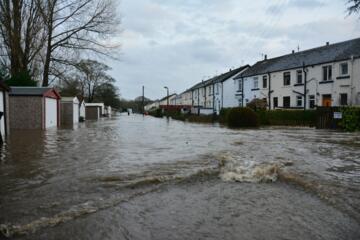
Flood has a technical definition that most homeowners have never read, and it is narrower than the everyday word. Federal flood coverage defines a flood as a general and temporary condition of partial or complete inundation of normally dry land, and it requires that the inundation affect either two or more acres or two or more properties. Water in your basement alone, from your own drainage, does not meet that definition — which is why a claim can be refused by the homeowners policy as flood and by the flood policy as not-flood. That gap is real, and the third category that falls into it is sewer and drain backup, which needs its own endorsement. See why floods are usually not covered and flood versus water backup.
Earthquake is excluded through a broader earth movement exclusion that also reaches landslide, subsidence and sinkholes in most wordings. Coverage is available as an endorsement or separate policy, usually with a percentage deductible and its own waiting period.
Wind remains covered in most of the country but is increasingly carved out in coastal markets, either through a separate windstorm policy or through a percentage deductible with its own trigger.
The Deductible Has a Trigger of Its Own
This is where two separate mechanisms get confused. Coverage triggers decide whether you are paid. Deductible triggers decide how much comes off, and in catastrophe-exposed states the deductible for wind is often a percentage of the dwelling limit rather than a flat sum.
Which one applies depends on how the event is classified:
- A named storm deductible generally applies once a storm has been formally named.
- A hurricane deductible typically requires a hurricane watch or warning for your area, and the window may extend for a stated period after the warning ends.
- A severe thunderstorm that meets neither definition falls under your ordinary flat deductible.
Read the trigger language and convert every percentage into a dollar figure before a storm season rather than during one. The arithmetic is in how a deductible works on a home claim.
When Two Causes Combine
Wind opens a roof and water enters. Which one caused the loss?
The traditional answer, efficient proximate cause, looks for the dominant cause and applies its coverage. Most modern policies contain an anti-concurrent causation clause written to displace that, excluding loss caused directly or indirectly by an excluded peril regardless of any other cause contributing in any sequence. Where courts enforce that language, the presence of flood can bar the whole loss even though wind contributed.
Enforcement varies sharply by state, and the practical consequences are set out in policyholder rights during a major insurance emergency.
Pulling the other way is the ensuing loss provision, which most people have never heard of and which recovers a surprising number of claims. It works like this: a cause may be excluded, but damage that follows from it as a separate covered peril can still be paid. Faulty workmanship is excluded — but if faulty workmanship causes a pipe to fail and water damages the floors, the water damage may be an ensuing loss and payable even though the repair to the defective work is not. Ask the question explicitly when a denial cites a cause-based exclusion, because the ensuing damage is often the larger number.
Triggers That Depend on Time Rather Than Damage
Two coverages activate on a condition instead of on physical damage, and both are under-claimed.
Additional living expenses triggers when the home becomes uninhabitable. That is a habitability test, not a destruction test: loss of utilities, smoke odor or contamination can make a house unlivable while it still looks intact. See what this coverage pays.
Civil authority triggers when a government order prohibits access to your property, typically requiring that the order arose from damage to nearby property caused by a covered peril, and usually limited to a defined number of days. Mandatory evacuation ahead of a storm may or may not satisfy it depending on the wording — read whether yours requires actual nearby damage or merely an order.
Parametric Coverage, and Why It Is Not a Free Lunch
Everything above is indemnity coverage: it pays what you actually lost, after someone assesses it.
A parametric product pays a fixed amount when a measured parameter is exceeded — a recorded wind speed at a defined location, a shake intensity, a rainfall total. No adjuster, no inspection, and payment in days rather than months.
The honest trade-off is basis risk, which cuts both ways. Your house can be destroyed while the sensor a few miles away records a value just below the threshold, in which case you receive nothing. Or the threshold can be crossed while your property is undamaged, in which case you are paid regardless.
Three things to understand before considering one. It is a supplement, not a substitute, and it is normally used to cover the deductible and immediate cash needs rather than the rebuild. The trigger location and data source matter more than the payout amount — a threshold measured at a distant station is a different product from one measured nearby. And availability to individual homeowners in the United States is still limited; most of the market is commercial or community-level, though consumer products exist in some catastrophe-exposed regions.
Reading Your Own Trigger Language
- Find the insuring agreement and note whether the dwelling and contents are open peril or named peril. If contents are named peril, read the list.
- List the excluded perils and check which of them you have bought back — flood, earthquake, water backup, ordinance or law.
- Convert every percentage deductible to dollars and note what triggers each one.
- Check whether an anti-concurrent causation clause is present, and whether your state limits it.
- Read the additional living expenses trigger and the civil authority provision, including its time limit.
- Look for the ensuing loss wording attached to the exclusions, since it is the provision that recovers claims other people abandon.
How these choices feed back into what you pay is covered in how premiums are calculated, and the buying decision before a season starts is in what to review before storm season.
Where This Bites in Practice
Three recurring situations show the triggers interacting rather than operating one at a time.
A hurricane that brings both wind and surge. Two policies, two triggers, one event. The wind damage runs through the homeowners policy subject to a percentage deductible; the surge is flood and runs through separate coverage with its own limits and no additional living expenses if the coverage is federal. Documenting which damage came from which is the whole claim.
A long freeze. A burst pipe is generally covered. The same policy usually excludes freezing damage where the building was unoccupied and reasonable heat was not maintained, which converts a covered peril into an excluded one on the basis of what you did rather than what happened.
A wildfire that never reaches the house. No flames, no structural damage, and a property full of smoke residue. This is the clearest example of the direct physical loss question, and it turns on measurement rather than argument.
Questions People Ask
My policy says all risk. Does that mean everything?
No. All risk and open peril mean the same thing: covered unless excluded. The exclusions list is where the real content is.
Wildfire smoke damaged my house but there was no fire nearby. Covered?
It turns on the direct physical loss trigger and on evidence of actual contamination rather than odor alone. Testing that documents residue on surfaces and in ductwork is what converts this from an argument into a measurement.
Why did my flood claim get refused when there was clearly water everywhere?
Check the definition. Federal flood coverage requires inundation of normally dry land affecting two or more acres or two or more properties. Water confined to your own property from your own drainage is a different category.
Is parametric coverage worth buying?
As a supplement to cover a large percentage deductible and immediate cash needs, it can be. As a replacement for indemnity coverage it is not, because basis risk means it may pay nothing when you are worst affected.
What triggers the wind deductible if a storm was never named?
Your ordinary deductible usually applies, which is one of the few situations where the arithmetic works in your favour.
The Short Version
Coverage turns on direct physical loss or damage. Arguments that look like they are about disasters are usually about that phrase.
Your policy runs open peril on the structure and named peril on your belongings, which means the burden of proof reverses depending on what was damaged. Contents can usually be upgraded.
Flood, earthquake and increasingly wind carry separate triggers and separate policies, and the federal flood definition is narrower than the word — two or more acres or two or more properties inundated. Sewer backup falls between all of them and needs its own endorsement.
Learn two provisions nobody reads: anti-concurrent causation, which can defeat a claim where an excluded peril contributed at all, and ensuing loss, which can rescue one where the damage that followed an excluded cause is itself covered.
Sources and Editorial Note
The statutory definition of a flood, coverage limits and waiting periods under federal flood insurance are published by the National Flood Insurance Program at FloodSmart. General policy structure, peril definitions and catastrophe loss context are published by the Insurance Information Institute. Aggregate insured catastrophe loss figures are revised annually and are not reproduced here without a date.
Case examples circulating online that attribute specific percentage improvements in claim speed or customer satisfaction to named insurers following policy revisions are not supported by published data and have been omitted, as has an asserted figure for how much longer disputed claims take to pay.
Open and named peril structures, anti-concurrent causation enforcement, ensuing loss wording, civil authority provisions, percentage deductible triggers and the availability of parametric products all vary by policy, insurer and state, and change at renewal. This article is general information, not legal advice and not advice on your specific policy — read your own insuring agreement and exclusions, and contact your state insurance department with questions about rules where you live.