Popular Articles
 Home
01.07.2026
Home
01.07.2026
How a Deductible Works on a Home Claim
A percentage deductible is not a percentage of your damage. It is calculated on your dwelling limit — the cost of rebuilding the whole house — which means a two percent wind deductible on a home insured for $400,000 is $8,000 whether the damage is $9,000 or $200,000. This guide covers how many deductibles you probably have and what triggers each, what counts as a single occurrence when two storms damage the same roof, why the deductible comes off the first payment and makes the initial cheque look startlingly small, the three places it does not apply, and the contractor offer to absorb it that is prohibited in many states.
 Home
20.06.2026
Home
20.06.2026
Do You Need Flood Insurance? How to Decide
The federal flood programme rebuilt how it prices policies, and most guidance on this subject still describes the old system. Premiums are now built from your individual structure — elevation, foundation, distance to water, rebuilding cost — rather than from the zone on a map, and increases toward the full risk-based rate are phased in, so the figure you are quoted today may not be the one you end up paying. This guide covers what the zone still tells you (whether a lender will require coverage, not whether you need it), the three gaps in federal coverage that catch people out, how private flood policies differ, and a four-question framework for deciding — including when the honest answer is no.
 Home
19.06.2026
Home
19.06.2026
What Homeowners Insurance Actually Covers
A homeowners policy is not one product but six coverages sold together, and five of them are usually calculated as a percentage of the dwelling limit — which means an incorrect limit quietly misprices everything at once. This guide walks through each section, explains why your belongings are covered on a narrower basis than the building itself, lists the category caps that apply regardless of how much contents coverage you bought and that frequently apply to theft specifically, and covers the two settings on your declarations page that decide more than anything else: whether the structure and contents settle at replacement cost or actual cash value, and how the roof settles.
 Home
06.06.2026
Home
06.06.2026
How Home Insurance Premiums Are Calculated
Guides on this subject list a dozen rating factors and imply they carry similar weight. They do not. Location and rebuilding cost dominate the calculation, and both are largely outside your control, which means an afternoon spent collecting small discounts is working on the last slice of the number. This guide sets out what actually moves the figure: the roof, now assessed from aerial imagery without an inspector visiting; the shared claims database that follows the property rather than the owner and can include a previous owner's claims; the credit-based insurance score and the states that restrict it differently for home than for auto; and the arithmetic of whether a small claim is worth filing at all.
 Home
05.06.2026
Home
05.06.2026
How to Know If Your Home Is Insured for Enough
Choosing the right amount of home insurance is essential to protect both your property and your long-term finances, yet many homeowners and investors are underinsured because they rely on outdated home values, confuse market price with rebuild cost, or overlook key categories like personal belongings, liability, and loss-of-use coverage. This guide explains how to estimate replacement cost, account for local labor/material inflation, upgrades, and ordinance-or-law requirements, and document contents accurately. It also shows how to use insurer calculators and third-party valuation tools, with real examples of coverage gaps and claim scenarios. You’ll learn the most common pitfalls to avoid - incorrect deductibles, missing endorsements, and failing to update policies after renovations - so you can verify your coverage is truly adequate before a loss occurs.
 Home
27.05.2026
Home
27.05.2026
Natural Disaster Home Insurance: Coverage Trigger Models
Property policies do not pay because a disaster happened. They pay because of a phrase in the insuring agreement — direct physical loss of or damage to covered property — and most disputes that look like arguments about hurricanes or wildfires are arguments about those words. This guide covers how the trigger works, why a standard policy runs open peril on your building and named peril on your belongings so the burden of proof reverses between them, the technical definition of flood that leaves sewer backup uncovered by everything, the deductible triggers that decide how much comes off, and two provisions worth knowing by name: anti-concurrent causation, which can defeat a claim, and ensuing loss, which can rescue one.
 Home
30.04.2026
Home
30.04.2026
How to Handle a Denied Home Insurance Claim
Three different situations get called a denial, and choosing the wrong remedy for yours costs months. The insurer may be saying the loss is excluded, or that you breached a condition such as late notice or repairing before inspection, or it may simply be paying too little while calling it a partial denial. The appraisal clause that most people reach for resolves only the third of these. This guide covers how to tell them apart, what to request from the claim file, the two deadlines that keep running while you appeal, the escalation ladder in cost order, and which kinds of evidence actually move a property claim.
 Home
23.04.2026
Home
23.04.2026
Flooded House: Insurance Steps Most People Get Wrong
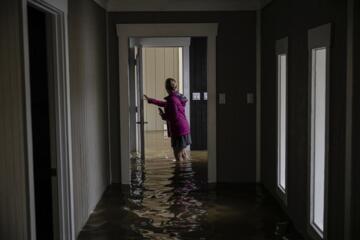
This comprehensive guide addresses the critical procedural gaps homeowners encounter when dealing with significant residential water damage. Designed for property owners and real estate managers, it provides a technical roadmap to bypass common claim denials and maximize settlement recovery. We solve the problem of "invisible errors"—the small mistakes in documentation and mitigation that lead to thousands of dollars in out-of-pocket losses.
 Home
16.04.2026
Home
16.04.2026
What to Do Immediately After Your Home Is Damaged by Fire
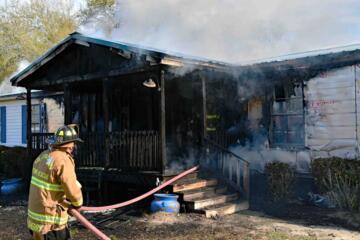
Once the fire service leaves, most of what determines your settlement happens in the next few days, and two of the decisions are ones nobody warns you about. If a defective appliance or wiring started the fire, that object is evidence your insurer needs to recover from the manufacturer — and your deductible usually comes back when it does, provided the object survives the cleanup. And when a contents restoration crew packs out your belongings, the inventory they produce is effectively your contents claim, written by someone who does not work for you. This guide covers both, the six coverages that apply to a fire and are routinely missed, why the widely quoted mitigation statistics come from the firms selling mitigation, and what not to sign in the first 48 hours.
 Home
13.04.2026
Home
13.04.2026
10 Items Your Homeowners Insurance Might Not Cover
The largest gap in most American homeowners policies right now is not an exclusion at all — it is a settlement clause sitting inside policies whose declarations page still says "replacement cost." Roof payment schedules depreciate the payout by the roof's age, and percentage wind and hail deductibles have replaced flat ones. This guide covers that plus nine other gaps, from rising water and earth movement to sub-limits on valuables and the vacancy clause that suspends coverage on an empty house.